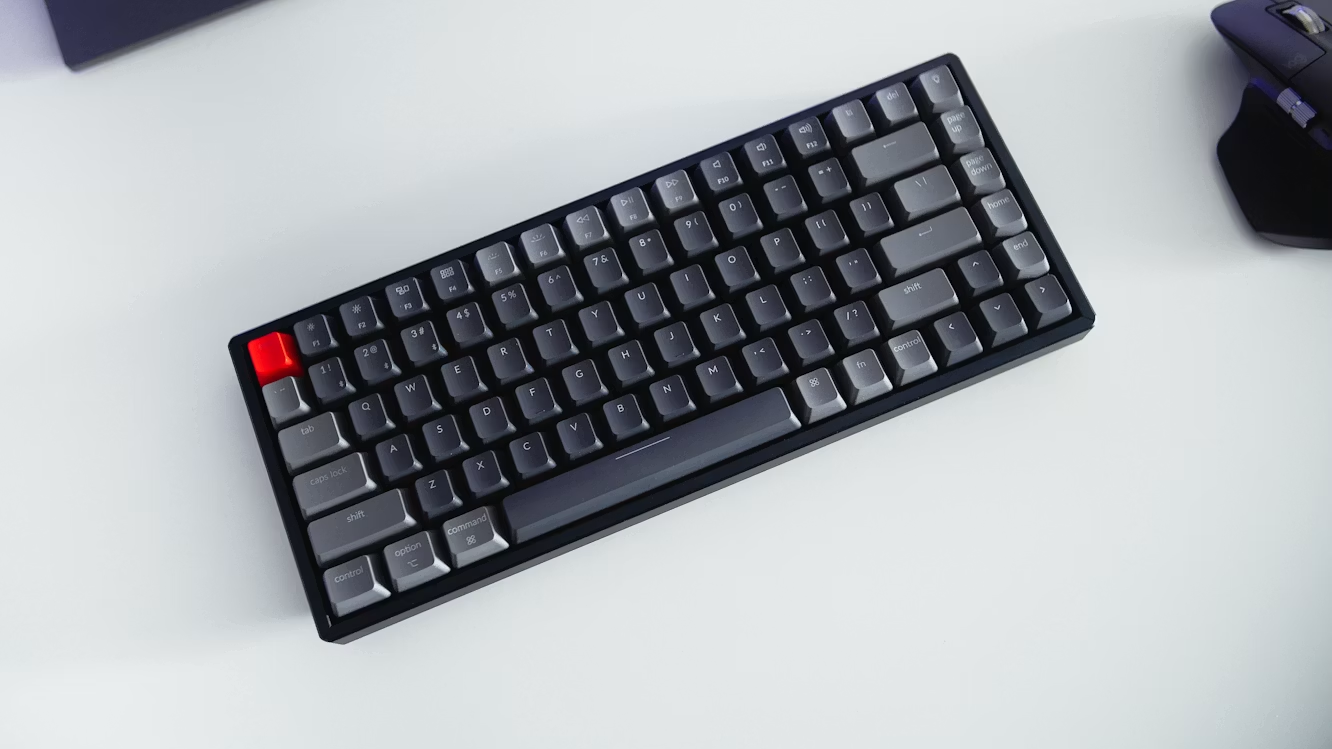

If you’re typing at a desk that feels just a little too high, your shoulders are paying the ultimate price. Discovering the best keyboard trays isn’t just about saving space on a tiny desk; it’s about radically lowering your typing height to perfectly match the biomechanics of your arms.
Most standard dining tables and cheap office desks sit at exactly 30 inches off the floor. If you are under six feet tall, reaching up to a 30-inch surface forces you to shrug your shoulders, which pinches the nerves in your neck and causes severe tension headaches. Ergonomics researchers at the Occupational Safety and Health Administration (OSHA) state that your keyboard should sit just above your lap, allowing your elbows to rest at a relaxed 90-degree angle. Let’s explore how the best keyboard trays solve this problem instantly for your home office setup.
The Track-Mounted Articulating Tray
If you want the absolute pinnacle of ergonomic adjustment, you need a track-mounted articulating tray. This requires you to screw a long metal track directly into the underside of your wooden desk.
Once installed, the keyboard tray slides smoothly in and out from under the desk. The magic, however, lies in the “articulating” arm. You can effortlessly adjust the height of the tray up and down, and even change the tilt! A slight negative tilt (tilting the keyboard down away from you) keeps your wrists perfectly straight, completely eliminating the dangerous extension that causes carpal tunnel syndrome.
The Clamp-On Tray (No Drilling Required)
Not everyone is comfortable taking a power drill to their expensive standing desk. If you rent an apartment or own a glass desk, track-mounted systems are impossible to install. This is where clamp-on trays shine.
The best keyboard trays in the clamp-on category use two massive C-clamps that bite securely onto the front edge of your desk. They install in three minutes and don’t require a single tool. While they generally don’t offer the extreme height and tilt adjustments of an articulating track system, they perfectly lower your keyboard by the crucial 3 to 4 inches needed to relax your shoulders.
Watch Out for the Width
Before you hit the buy button, you absolutely must measure the width of your peripherals. A standard full-size keyboard with a number pad is roughly 18 inches wide. If you buy a keyboard tray that is only 24 inches wide, you will only have 6 inches of space left for your mouse!
This creates a cramped, claustrophobic mouse area where you are constantly bumping your hand into the side of the keyboard. You should actively hunt for extra-wide trays (at least 27 to 30 inches wide) so your mouse has plenty of room to sweep across dual monitors.
Knee Clearance is Critical
Adding a tray under your desk drastically changes the vertical space available for your legs. If you have thick thighs or like to cross your legs while you work, the metal brackets of the tray might violently hit your knees.
Always measure the distance between the floor and the bottom of your desk. Ensure that lowering a tray by 4 inches still leaves plenty of clearance for your legs to move freely without bruising your kneecaps.
Final Thoughts
If you can’t afford a $600 adjustable standing desk to fix your typing height, a keyboard tray is the ultimate budget hack. By dropping your keyboard down to lap-level, you instantly fix your posture, relax your shoulders, and protect your wrists from repetitive strain injuries.