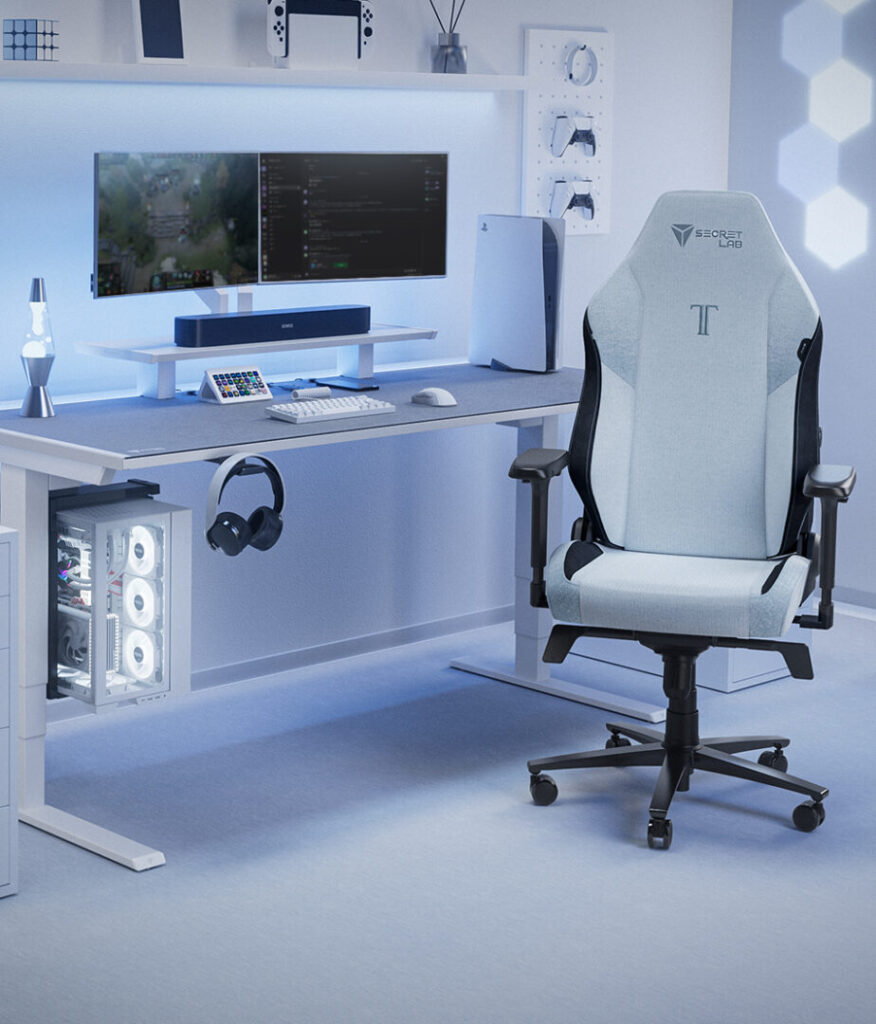

Everyone knows that a monitor needs to be at eye level, but almost no one talks about the pitch of the screen. If you finish your workday with a brutally stiff neck and severe dry eyes, the angle of your glass is likely to blame. In the debate of having your monitor tilted up or down, there is one medically correct answer that will instantly relieve your tension.
When you unbox a brand new monitor, the factory stand is usually locked perfectly vertically at 90 degrees. Depending on your height and your chair, this flat angle forces your neck to compensate by jutting forward into a terrible “turtle posture.” According to the occupational therapists at OSHA, the angle of the screen dictates the angle of your cervical spine. Let’s settle the monitor tilted up or down debate and perfectly align your home office setup.
The Danger of Tilting the Monitor Down
Let’s start with the absolute worst posture: having the monitor mounted high and tilted steeply downward toward your face.
If your screen is tilted down, it means the top edge of the monitor is physically closer to your eyes than the bottom edge. This forces your chin to tuck tightly into your chest to read the lower half of the screen. Sustaining a tucked chin for eight hours puts immense, crushing pressure on the discs in your lower neck, leading to severe cervical spine pain and numbness radiating down your arms.
The Golden Rule: Tilted Slightly Up (10 to 20 Degrees)
The medical consensus is clear: the top edge of your monitor should be positioned exactly at your eye level, and the screen should be tilted slightly upward (backward) by 10 to 20 degrees.
When the screen is tilted slightly upward, the bottom of the screen swings closer to your face. Because our eyes naturally rest at a 15-degree downward angle, this upward tilt ensures that every single pixel on the screen—from the URL bar at the top to the taskbar at the bottom—is exactly the same focal distance from your retinas. This completely eliminates the need for your neck to crane forward to read the bottom of the screen.
The Dry Eye Connection
Tilting the monitor slightly upward has an incredible, hidden benefit for your eye health.
When you look straight ahead at a perfectly vertical monitor, your eyelids must open extremely wide, exposing maximum surface area to the dry, air-conditioned air of your office. By placing the monitor at eye level and tilting it slightly up, you force your gaze slightly downward. This downward gaze allows your upper eyelids to droop and cover a significant portion of your eyeball, drastically reducing tear evaporation and curing chronic dry eyes.
Combating Overhead Glare
There is one scenario where you must break the rules: terrible overhead lighting.
If you have bright, harsh fluorescent lights directly above your desk, tilting the monitor upward will turn the glass into a mirror, reflecting those ceiling lights directly into your eyes. If you cannot turn off the overhead lights (for example, in a corporate cubicle), you are forced to keep the monitor perfectly vertical (0 degrees tilt) to bounce the ceiling glare down into your keyboard instead of your retinas.
Final Thoughts
Stop fighting your screen. By setting the top bezel at eye level and aggressively answering the monitor tilted up or down debate by tilting the screen upward by 15 degrees, you naturally align your neck, cure your dry eyes, and create a perfectly comfortable ergonomic workspace.