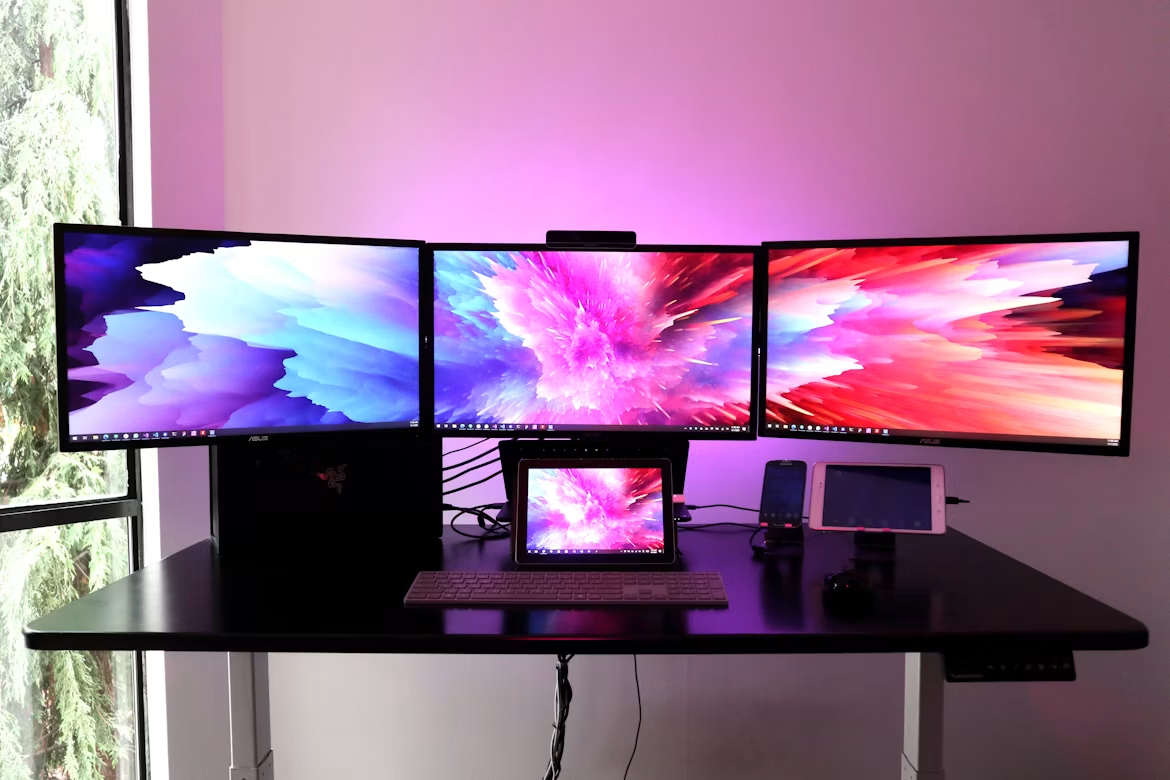

Switching to a sit-stand desk is one of the best choices you can make for your back. But after the initial excitement wears off, a lot of remote workers hit a brutal wall: standing in one spot for hours is exhausting. If your feet throb, your calves cramp, and your lower back aches by 3:00 PM, you’re dealing with serious standing desk fatigue.

I hear this complaint constantly. People spend $800 on a premium desk, use it for a week, and then leave it sitting at chair-height forever because standing hurts too much. According to physical therapists at the American Physical Therapy Association, standing completely still is just as damaging to your body as sitting all day. To fix standing desk fatigue, we have to rethink how you actually use your home office setup.
The Biomechanics of standing desk fatigue
When you walk, the massive muscles in your legs act like secondary hearts, pumping blood back up through your veins. When you stand perfectly still, that system shuts off. Gravity takes over, and blood begins to pool in your lower legs. This increases venous pressure, causing your feet to swell and your calves to burn.
Simultaneously, the thick band of tissue under your foot (the plantar fascia) is forced to bear your entire body weight without any dynamic relief. This static load is the exact recipe for developing plantar fasciitis, a condition that can take months of painful physical therapy to cure.
Stop Standing on Hard Floors
If you take nothing else away from this article, let it be this: never stand barefoot or in socks on a hardwood, tile, or concrete floor. Hard surfaces offer absolutely zero shock absorption.
You must buy a high-density polyurethane anti-fatigue mat. A good mat is thick (around 3/4 of an inch) and highly compressible. When you stand on it, the foam creates micro-instability. Your body naturally makes tiny, imperceptible adjustments in your legs and feet to maintain balance. This micro-movement forces your muscles to fire, pumping the blood back out of your feet and drastically reducing fatigue.
The 20-8-2 Golden Rule
The absolute worst thing you can do is stand for four hours straight. Human bodies are built for transition, not static locking.
Ergonomics researchers recommend the 20-8-2 rule for every 30-minute block of work. You should sit in a highly supportive ergonomic chair for 20 minutes, press the button to stand for 8 minutes, and then actively move (walk to the kitchen, stretch) for 2 minutes. This constant rotation keeps your joints lubricated, your blood flowing, and entirely eliminates the static pressure that causes pain.
Use a Footrest While Standing
When you stand flat on both feet, your pelvis naturally tilts forward, which crunches the discs in your lower lumbar spine. If your lower back hurts while standing, this is why.
Grab a small footstool, a yoga block, or even a thick hardcover book, and place it under your desk. Rest one foot on the block while you work, and alternate feet every 10 minutes. Elevating one foot instantly tilts your pelvis backward, straightening out your lumbar spine and providing massive, immediate relief to your lower back.
Final Thoughts
Don’t give up on your standing desk! By grabbing a proper anti-fatigue mat, using a footrest, and strictly following the 20-8-2 rotation rule, you can completely eliminate the pain and finally reap the incredible health benefits of an active workspace.