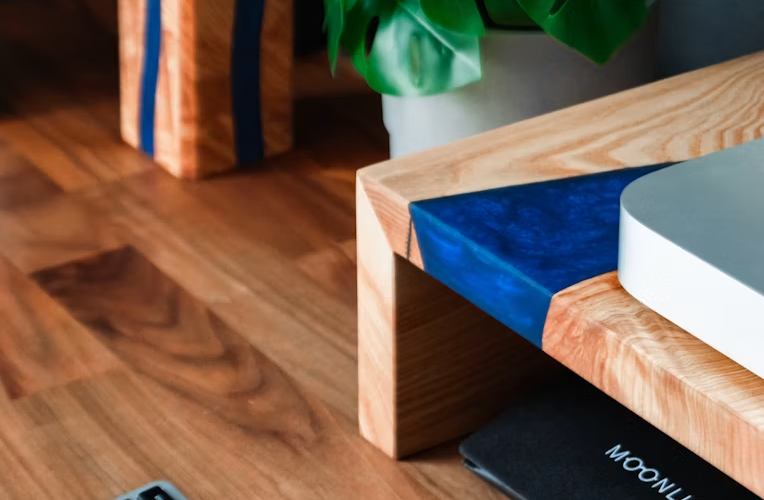

Building your own massive workspace by throwing a thick piece of kitchen countertop on top of a standing desk frame is the greatest DIY trend in remote work history. However, raw wood is a sponge. If you do not choose the correct wood finish for butcher block desk projects, a single drop of iced coffee condensation will permanently stain your masterpiece.
Kitchen butcher blocks are shipped completely raw. You absolutely must seal the porous wood fibers before you place a keyboard or a mouse on them. The woodworking experts at Family Handyman explain that different finishes provide vastly different levels of protection against heat, water, and scratching. Let’s break down the best options to find the perfect wood finish for butcher block desk builds to protect your home office setup.
📐 Unsure About Your Desk & Chair Height?
Use our free Ergonomic Desk Height Calculator to get exact inch-by-inch measurements for standing, sitting, and monitor positioning based on your height.
Polyurethane (The Bulletproof Shield)
If you want absolute, maximum protection against water rings, coffee spills, and the aggressive scratching of a metal keyboard chassis, Oil-Based Polyurethane is the undisputed king of finishes.
Polyurethane essentially acts like a layer of liquid plastic. When it cures, it sits entirely on top of the wood, creating a hard, impermeable shell. You can spill a cup of hot coffee on a poly-coated desk, leave it there for an hour, and simply wipe it away with zero damage to the wood underneath. The downside? It takes days to fully cure, it smells terrible during application, and it leaves a slightly artificial, plastic-like sheen on the wood (even if you buy a “matte” version).
Danish Oil (The Gorgeous Natural Look)
If you hate the glossy, plastic feel of polyurethane and want your desk to feel like real, organic wood under your wrists, Danish Oil is the ultimate choice.
Unlike poly, which sits on top, Danish Oil actually penetrates deep into the pores of the wood, hardening the fibers from the inside out. It enhances the natural grain and brings out deep, rich, gorgeous colors. The application process is incredibly easy and forgiving for beginners—you literally just wipe it on with a rag, let it soak, and wipe off the excess. While it doesn’t offer the bulletproof water resistance of poly, it is easily repairable; if you scratch it, you just rub a little more oil into the scratch and it disappears.
Water-Based Polycrylic (The Fast-Drying Option)
If you are building your desk inside a small apartment and cannot deal with the toxic fumes of oil-based polyurethane, Water-Based Polycrylic is the perfect compromise.
Polycrylic goes on milky white but dries completely crystal clear. It dries to the touch in less than 30 minutes and has almost zero odor, meaning you can finish a desk in your living room without suffocating. It provides excellent protection against water and scratches. However, it will not enhance or “warm up” the color of the wood grain like an oil-based finish does, making the final product look slightly paler.
Avoid Standard Mineral Oil
If you Google “how to finish a butcher block,” you will see thousands of chefs recommending food-safe mineral oil. Do not use this for a desk!
Food-safe mineral oil is designed for cutting boards that touch raw meat. It never truly dries or cures; it just stays eternally wet inside the wood. If you coat your desk in mineral oil, any paper you set on it will absorb the oil and become translucent, and the bottom of your expensive mousepad will be permanently ruined by the greasy residue.
Final Thoughts
Choosing the right sealant dictates how your desk looks and survives over the next decade. If you want a desk that can survive a nuclear apocalypse and constant spills, brush on three coats of Polyurethane. If you want a stunning, natural, organic workspace that you can easily repair, wipe down your masterpiece with a high-quality Danish Oil.